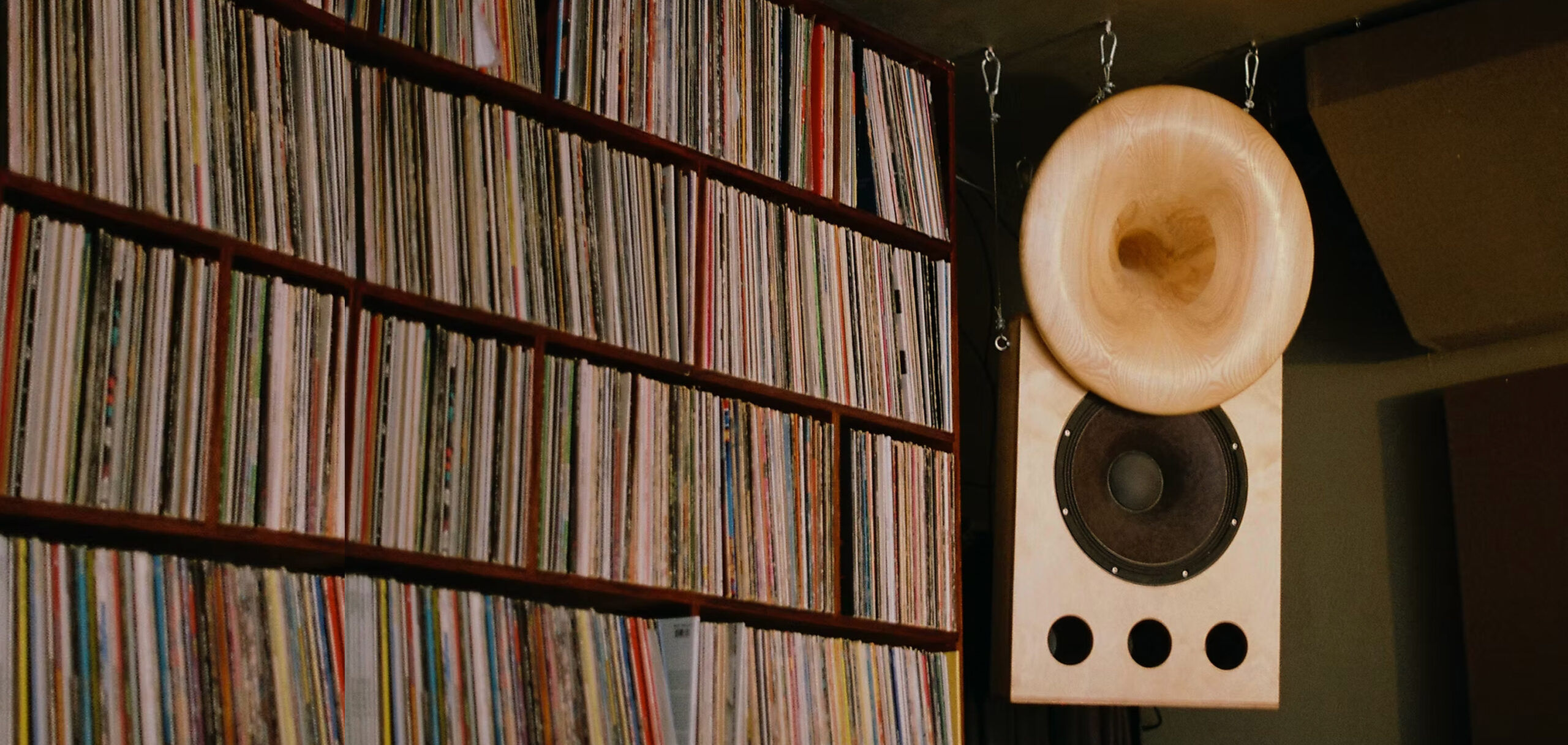
Listening bars a phenomenon on the rise
It’s ten o’clock on a random Wednesday night and I get a message from a Portuguese follower. He’s asking for places where he can listen to music and enjoy a relaxed atmosphere in Barcelona and Madrid during his upcoming trip.
Without overthinking it… I recommend a listening bar, where all the music is played on vinyl and a curator selects the very best of the best and a bar tender who makes a mean old fashioned.
Author: Cristina Perez
“
That’s when it hits me: something is changing in the way we listen to music. ”
It’s not just about platforms, or algorithms, or even the speed at which new releases drop every week. It has more to do with the relationship we have with what we listen to: how much time we give it, how we integrate it into our lives and, above all, what we decide is worth revisiting.
I once read that Ryuichi Sakamoto, Japanese composer and member of Yellow Magic Orchestra, one of the pioneering and most influential bands in electronic music, began curating playlists specifically designed to improve the dining experience.
The composer Brian Eno, best known for pioneering ambient music and for creating the iconic Windows start-up sound, also did something similar after spending more time than he would have liked in an airport, unimpressed by the background music (fair enough). He ended up releasing his own album. Respect.
But this idea of giving importance to listening moments isn’t new among those who care about sound quality. It’s just making a comeback.
In that context, new spaces, habits and ways of consuming music are starting to emerge—slightly outside the norm. Places where music stops being background noise… where listening means slowing down and paying attention. In a more poetic sense, committing to what’s playing.

Listening bars are a great example of this:
These spaces trace their origins back to Japanese jazz kissa, which began appearing in Tokyo in the 1920s. At the time, getting hold of American jazz records in Japan was difficult and, above all, expensive. So enthusiasts would gather in these venues to listen to the few records that made their way over.
Over the years, the phenomenon has grown not only in Japan but across the world, driven by two key factors: advances in sound systems and the need for more contemplative spaces—especially since the pandemic, when people started looking for new ways to build community and engage with calmer, more intentional experiences.
In the beginning, it wasn’t just about technology. What really set these places apart was the attitude. In Japanese jazz kissa, music is meant to be listened to—properly—while everyone remains in near silence.

A model that would be difficult to replicate in the West for obvious reasons: we see such occasions as opportunities for socialising (and for conversation).
In Europe, for instance, music has traditionally been part of the clubbing scene, more of a backdrop than the main focus. Still, cities like London and New York have tried to reinterpret the concept as faithfully as possible: prioritising sound quality and musical curation, even if people gather to talk and a sense of community naturally emerges.
Places where you don’t have to shout to be heard. Where you can spend hours without noticing. Just sitting with friends or flipping through record crates looking for hidden gems.
And maybe that’s the point: not just listening to music but sharing a moment around it. Letting it set the pace, instead of constantly chasing what comes next.


Every element inside a listening bar is carefully thought out and placed to help you slow down. Yes, almost like a set design—but not to fool you. Quite the opposite: to make sure everything unfolds just as it should.
People who arrive alone or in groups, but with the same intention of disconnecting from the outside world. The space, inviting you to stay longer than planned, to speak more softly, to look around and feel part of something. The DJ/curator, who doesn’t just play tracks but shapes the mood of the night. The vinyl records, turning listening into something more human, more intentional. And the sound system, so finely tuned that it creates an immersive, enveloping atmosphere.
“
In a world saturated with stimuli, automation and immediacy, we’re drawn to spaces where the human element regains its weight. Where someone has carefully decided what plays, and why. Where everything connects: the place, the people, the music. ”

Now, in Madrid, listening bars are becoming increasingly common. Each one has its own character, but they all share the same focus: music.
My favourite listening bar is still a secret I haven’t revealed—and I don’t think many people know about it yet, but they will. And many nights at home, I try to recreate that same atmosphere through its playlist a dim light and a drink.
It’s a bit of a paradox, I know… going back to streaming after being inside something so tangible and unique. But for me, it makes sense: I connected so deeply with that moment, and with the music, that I need to feel it again.
About the author: Cristina Perez
Cristina Pérez has always been closely connected to music journalism throughout her career. Today, as a content creator, she has become one of Spain’s leading tastemakers in emerging music, recognised for her keen eye for new talent and trends, as well as her thoughtful, critical perspective on the way we discover and consume music today.