How to explain Carnival in Brazil?
Written by Alexandre Santana
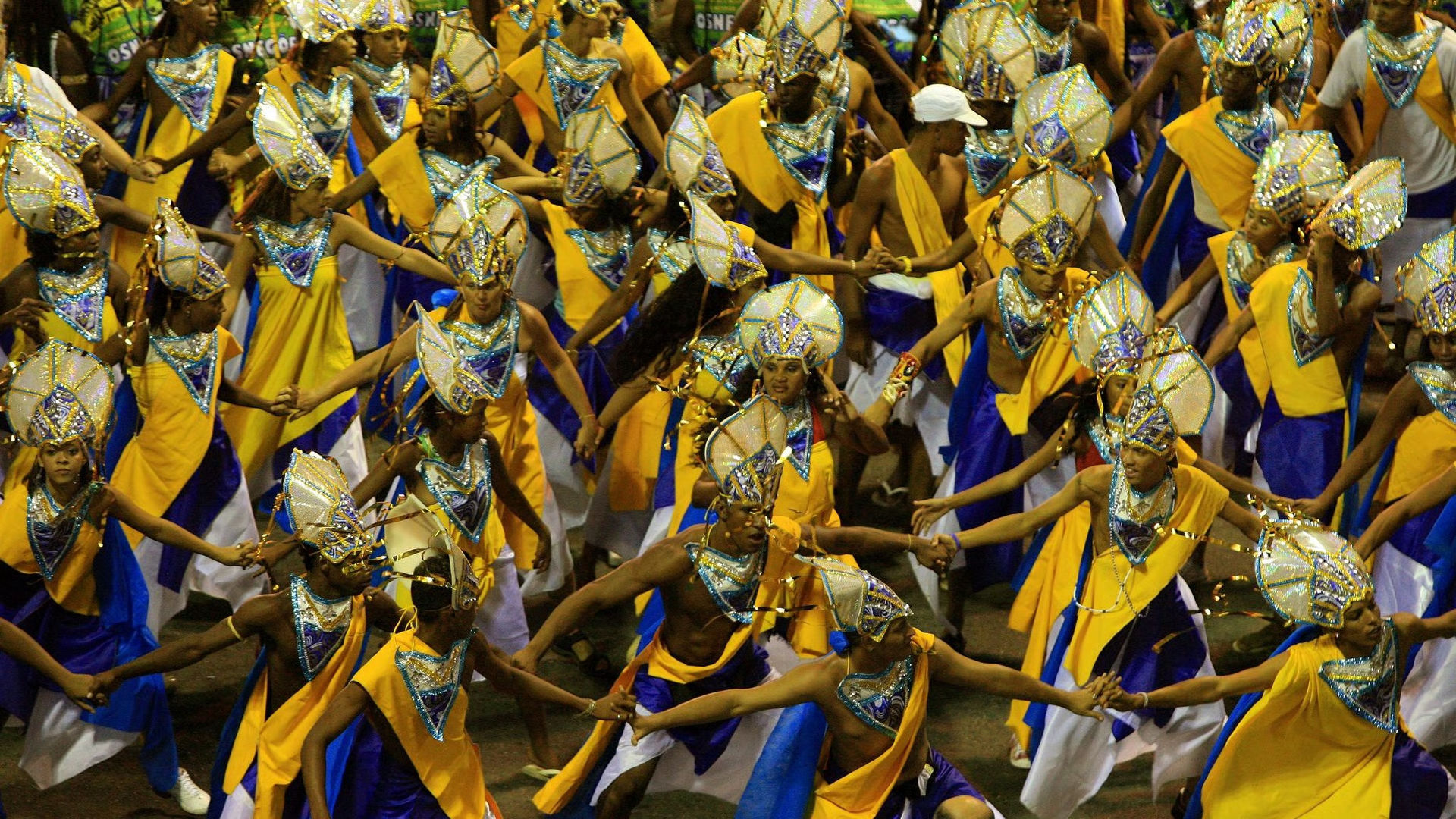
Hard to put into words, Brazilian Carnival is a cultural melting pot shaped by African, Indigenous, and European influences. Far from just a celebration, it’s a powerful expression of national identity, where the collective comes to life and culture moves in real time.
As diverse as Brazil itself, it takes many forms across the country, yet is held together by the same shared energy: the street as a stage, where we celebrate what it means to be Brazilian.
In Rio and São Paulo, Carnival is built throughout the year in local communities, culminating in the samba school parades. In the sambadromes, rigorous competitions bring together set design, choreography, percussion, and storytelling, turning the avenue into a grand stage that draws global attention.


Samba is one of Brazil’s most iconic cultural expressions, but it sits within a wider musical landscape that also defines the country. Shaped by Afro-Brazilian roots and the urban culture of early 20th-century Rio, it tells the story of everyday life, carried by the deep beat of the surdo, the swing of the pandeiro, and the melody of the cavaquinho.
In Salvador, Carnival is driven by trio elétricos and blocos afro. It’s no coincidence this is the world’s biggest street carnival – a kind of organised chaos led by the people. Genres like axé, pagodão, ijexá, and samba-reggae move millions in a wave of collective joy, shaped in Candomblé terreiros, on street corners, and through electric guitar riffs.
In 1950, musicians Adolfo Dodô Nascimento and Osmar Álvares Macêdo sparked a sound revolution aboard an adapted 1929 Ford. By adding amplifiers and electric instruments, they created the trio elétrico, transforming Carnival into a moving, open-air experience. It proved that music didn’t need a fixed stage. Just an engine and a lot of passion.

In Recife and Olinda, Carnival takes on a more traditional, community-led form. Frevo dominates, with its fast rhythms and acrobatic dance, alongside maracatu groups and the iconic giant puppets that move through historic streets. It’s more intimate, almost familial, where participation is direct and celebration happens without the filter of large commercial structures.
Across all these forms, one thing remains constant: joy. It’s sensory – an explosion of colour, food, rhythm, sweat, and sound where heritage meets the present. The street becomes a democratic space, bringing together people from all walks of life.
And it continues to evolve. From Belo Horizonte to Maranhão, São Paulo, and across the North and Northeast, these variations form a rich cultural mosaic – a reflection of Brazil’s diversity, creativity, and enduring optimism.