How Whisky is made

The Whisky making process
What is Whisky made from?
It all starts with three key players: grain, water, and yeast. When it comes to Scotch and Irish whiskies, malted barley is usually the grain of choice. That said, corn, rye, and wheat get in on the action too, especially in North American whiskies.
But here at Ballantine’s, we only source the best malt and grain from the four corners of Scotland. Once they’ve landed at our distilleries, that’s when the really good stuff starts to happen.
The real magic is in the small steps that come next. So buckle up, we’re diving into the entire process – we’ll outline all the stages of manufacturing, from start to bottling, and explore those tiny differences that leave a distinct mark on the final spirit.
Whisky making process
MALTING
1. Getting the whisky-making party started is easy. First, the grain is soaked in water, encouraging it to germinate and sprout. Things really start to get moving when enzymes join the mix. That’s when starch in the grains is broken down into simpler, soluble sugars. After germination, the malted barley is dried to halt the process. Was biology ever this fun at school? Not for us either.

MILLING
2. Once all the grain (in our case, barley), sugars, and enzymes dry, it’s time to grind it down, down, down. The grain is fed into a mill where it is crushed and broken into smaller pieces. The resulting coarse powder, known as grist, consists of crushed grains with a mixture of husks, grits, and flour. The composition of the grist, including the size of the particles, is important in controlling the next step in the process: mashing.

MASHING
3. Now’s the time for the sweetest hour as hot water is added to the grist in the mash tun: a special vessel designed to draw out the optimum level of sugary liquid called wort. The wort is then transferred into the wash back for fermentation. Spent grains are left behind and these can be converted into animal feed which is what we do here at Ballantine’s so that nothing is wasted.

FERMENTATION
4. This is where things get even more interesting. Once the wort is cooled, it is transferred to fermentation vessels. Yeast is added to the wort in the wash back to start the fermentation process and convert the sugars into alcohol. Fermentation times vary between distilleries, but it usually lasts around 48 – 56 hours. The result of fermentation is a liquid called wash which has an ABV of about 8%. Next comes distillation.

DISTILLATION
Things are starting to heat up
5. Distillation transforms the fermented wash into a higher-proof spirit. Every single malt whisky distillery uses two types of still; the wash still and the spirit still, which are commonly made of copper to shape the flavour during a two-part distillation process and remove unwanted sulphur compounds. The wash is heated with steam in the wash still to separate the alcohol and turn it into a vapour that rises up the still and condenses. This spirit, called low wines, is collected in a spirit safe. This is then distilled for a second time in the spirit still where only the heart of the second distillation, or ‘middle cut’, is collected as new spirit.

MATURATION
6. Whisky maturation is a critical and influential stage in the production process that transforms the distilled spirit into the final, matured whisky. The maturation process occurs in wooden casks, typically made of oak, and it significantly contributes to the characteristics of the whisky.

Several key considerations influence what happens to the whisky during the maturation stage:
Choice of cask: The type of cask used for maturation is a crucial factor in shaping the whisky’s profile. Common types of casks include American oak barrels, European oak barrels, and a variety of speciality casks. Each type of cask imparts something different. For example, American oak barrels can contribute vanilla and caramel notes, while sherry casks may add fruity and nutty flavours.
Cask size and shape: The size and shape of the cask influence the rate at which maturation occurs. Smaller casks have a larger surface area relative to their volume, allowing for more rapid interaction between the whisky and the wood. This can result in a quicker maturation process compared to larger casks.
Cask history: If a cask has been previously used to mature another spirit or wine such as sherry or rum, it can bring additional layers of complexity to the whisky. The residual flavours from the previous contents of the cask may influence the character of the maturing whisky.
Duration: The length of time the whisky spends in the cask is a significant aspect of maturation. The ageing process allows the whisky to interact with the wood, extracting compounds such as tannins, lignins, and vanillin. Over time, these interactions contribute to the development of the whisky’s colour, as well as its complexity and depth of flavour.
Climate: The environmental conditions of the warehouse where the casks are stored also play a role in maturation. The climate, temperature, and humidity levels can affect the rate at which the whisky interacts with the wood. Distilleries in different regions and climates may produce whiskies with unique characteristics based on these environmental factors.
Monitoring and sampling: Distillers regularly monitor the maturation process by sampling whiskies from different casks at various intervals. This allows them to assess the development of flavours and determine when the whisky has reached the desired level of maturity.
Whisky making process
BLENDING
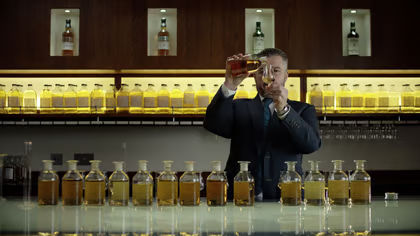
7. Whisky blending is the process of combining different whiskies to create a final product with specific flavour characteristics and qualities. This is commonly done by master blenders, who have expertise in selecting and combining various whiskies to achieve a desired taste profile. A blended Scotch whisky is a product of blending multiple single malt and grain whiskies and making blended Scotch is anything but easy. It requires great skill, an alarming level of intuition, excellent palate memory and a great nose. Throughout the history of Ballantine’s, hard work and passion for quality have always been present in our five master blenders. Each of the Ballantine’s blenders has looked after the continuity and quality of the Ballantine’s brand, staying true to the original family character of the whiskies.
BOTTLING
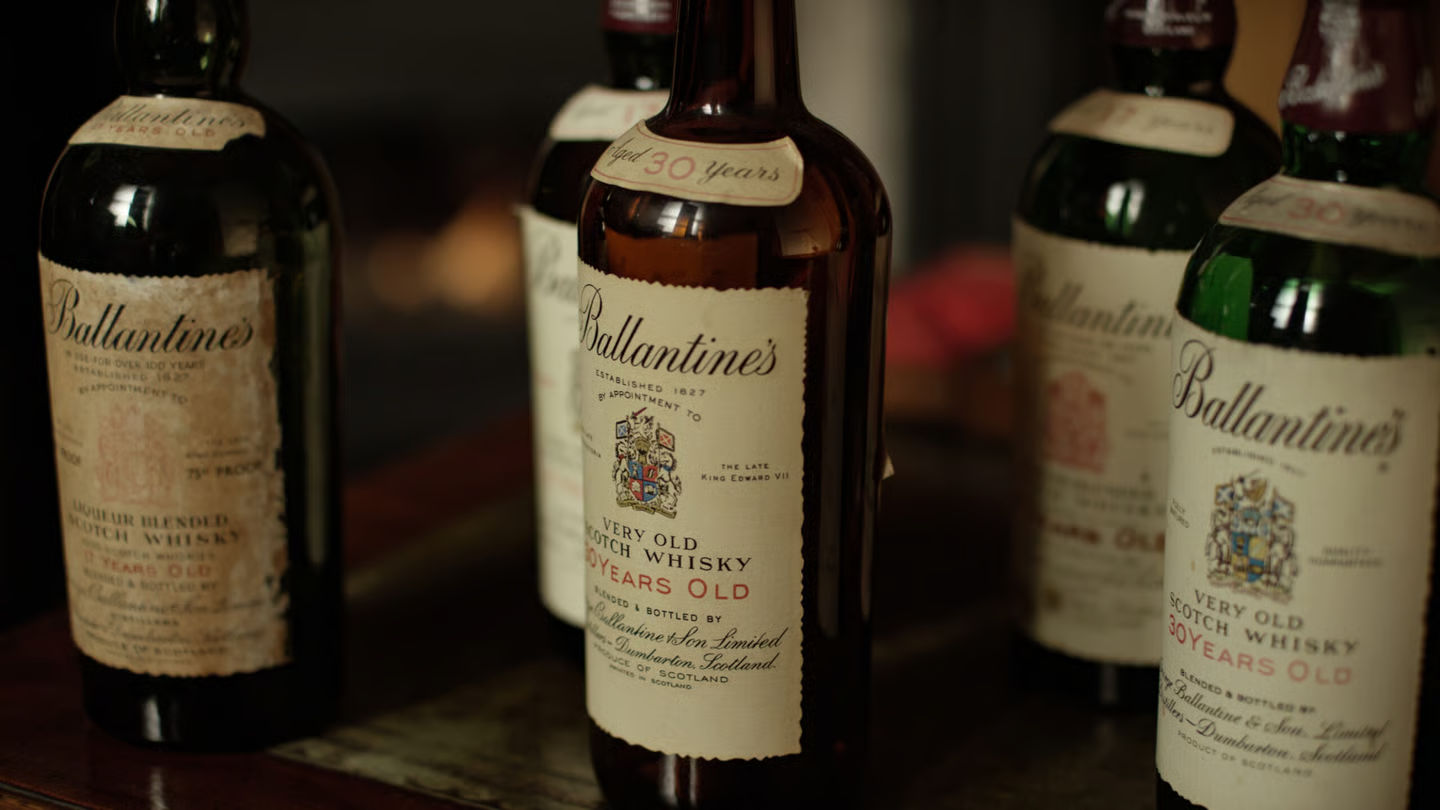
8. Once a whisky has reached its desired maturity, it’s time for it to be bottled. A great quality whisky deserves a quality bottle. Our Ballantine’s Finest blended scotch whisky is instantly recognisable by eye thanks to its iconic square bottle. But that’s not all. In 1938, the quality of our whisky was recognised with a Heraldic coat of arms which appears on every bottle of Ballantine’s Scotch whisky. Another feature that appears on every bottle is the Latin phrase, ‘Amicus Humani Generis’, meaning ‘a friend to all mankind’. A friend never lets you down and neither will Ballantine’s quality.
And there you have it. From humble beginnings to an amber nectar that is wonderfully complex.
A process that doesn’t just happen but takes numerous steps, carefully planned, and executed to perfection to ensure that each and every sip is just how it should be.
Now that you know the answer to ‘what is whisky made from?’ and have the inside scoop on how it is produced, the next step is knowing how to drink whisky. And we can help you with that. Read our guide on the types of whisky glasses ready for next time you reach for a bottle of Ballantine’s or take a look at our top tips for how to order scotch at the bar.
Our Range